You just turned 45. Maybe your primary care doctor brought it up at your last annual visit. Maybe a friend mentioned they'd recently had one. Either way, you're wondering: do I actually need a colonoscopy now? The short answer is yes — and the reason matters.
The Guidelines Changed — and There's a Solid Reason Why
For decades, 50 was the standard starting age for colorectal cancer screening. In 2021, the American Cancer Society lowered that recommendation to 45 for adults at average risk. The U.S. Preventive Services Task Force followed. This wasn't a cautionary measure pulled from thin air — it was driven by data.
Colorectal cancer rates among adults under 50 have been rising for more than two decades. People in their 40s are now among the groups seeing the fastest increases in new diagnoses. Meanwhile, rates in adults over 65 have been declining — largely because that age group has been getting screened consistently for longer.
"The connection between screening and prevention is well-documented. Moving the starting age to 45 is an extension of what's already working — applied to the group that needs it most right now."
For adults in South Houston, Pearland, Lake Jackson, and surrounding Southeast Texas communities, this matters. The Gulf Coast region carries the same risk profile as the rest of the country — and in some areas sees slightly elevated rates of obesity and type 2 diabetes, both independently associated with higher colorectal cancer risk.
Colonoscopy Does Something Most Screenings Don't

Here's what sets colonoscopy apart from nearly every other cancer screening: it doesn't just find cancer. It can prevent it.
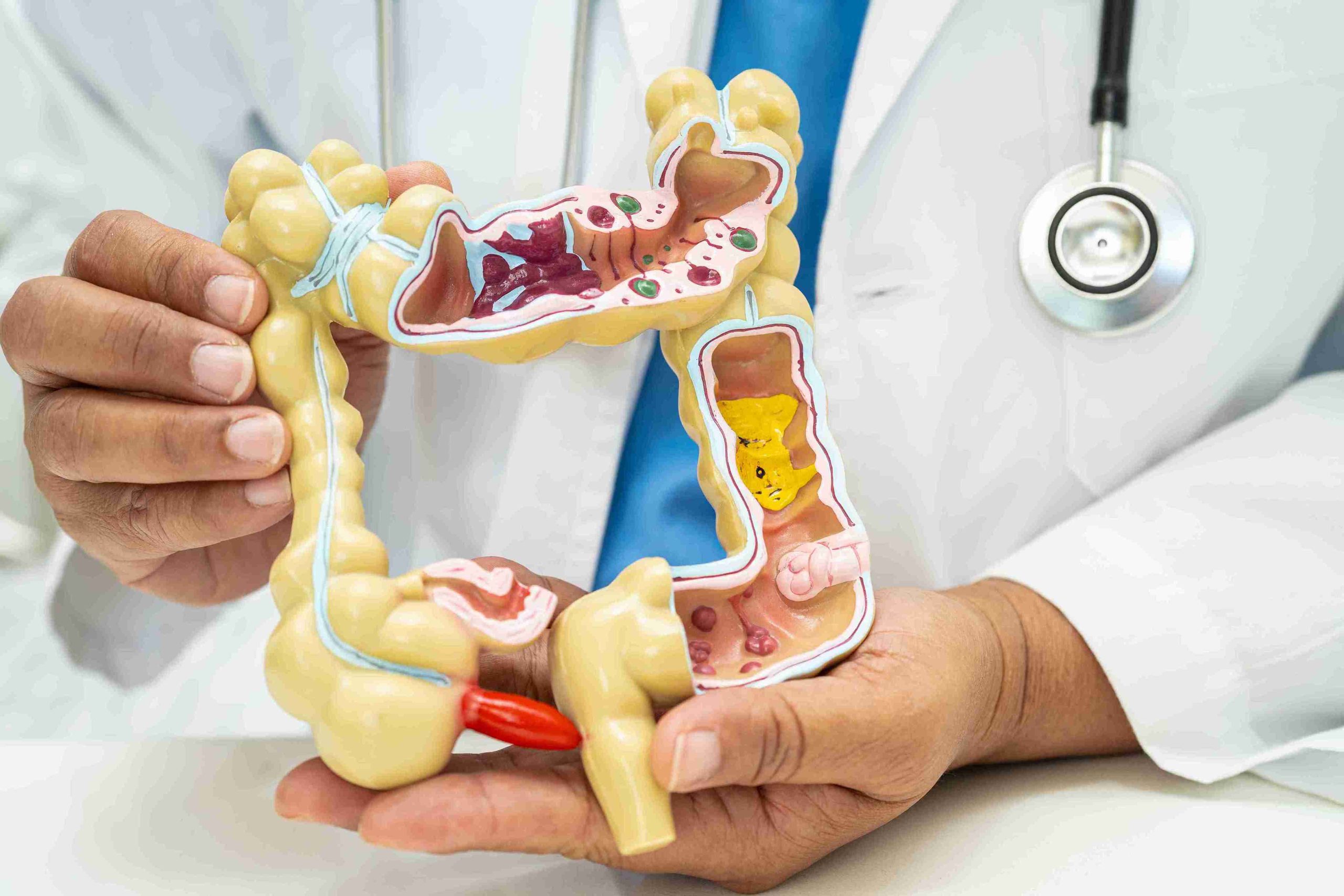
A colonoscopy finds polyps — small growths in the colon lining — and removes them during the same procedure. A polyp removed before it turns cancerous is a cancer that never happens.
If nothing is found, you typically won't need another colonoscopy for ten years. One procedure. One decade of coverage. That's an efficient investment in your long-term health.
Are You at Average Risk — or Should You Start Earlier?
The recommendation to begin at 45 applies to average-risk adults. You should speak with a gastroenterologist in Houston sooner if any of the following apply:
- A parent, sibling, or child has had colorectal cancer or advanced polyps — especially before age 60
- You have a personal history of colon polyps or colorectal cancer
- You've been diagnosed with Crohn's disease or ulcerative colitis
- You carry a hereditary condition such as Lynch syndrome or familial adenomatous polyposis

If any of the above apply to you, don't wait for your 45th birthday. Contact Your GI Center to schedule a consultation and determine the right screening timeline for your situation.
What the Procedure Actually Involves
The procedure is performed under sedation. You're asleep. You feel nothing. Here's how it unfolds step by step:
Clear liquid diet and a laxative solution to clear the colon. Modern prep solutions are far more tolerable than older versions.
A thin, flexible scope with a camera is gently advanced through the colon. You're fully sedated and feel nothing throughout.
Any polyps found are removed using small instruments passed through the same scope — no separate procedure required.
You wake up in a recovery area, spend about an hour there, then go home. Arrange a driver — you cannot drive after sedation.
Common Myths — Cleared Up
Colorectal cancer rarely causes symptoms in its early stages. Feeling fine is not a reliable indicator of colon health. That's precisely why screening exists — to find problems before your body signals them.
Finding a polyp is actually a good outcome — it means the screening worked. Polyps removed early never become cancer. The alternative, finding cancer that's already spread, is far more difficult to treat.
Ask anyone who's been through it recently. Most say it was significantly less bad than they expected. The anxiety beforehand is almost always worse than the prep itself — and modern formulas have improved dramatically.
Why Waiting Isn't the Safe Choice
Colorectal cancer doesn't announce itself in its early stages. By the time symptoms appear — rectal bleeding, unexplained weight loss, persistent cramping — the disease may have already progressed significantly.
Stage 1 colorectal cancer carries a five-year survival rate above 90 percent. Stage 4 drops below 20 percent. The window between those two outcomes often comes down to one question: was this person screened?
For adults in Pearland, South Houston, and Lake Jackson, access to expert colonoscopy screening is close. Don't let convenience be the reason you wait.

Schedule Your Colonoscopy at Your GI Center
Our board-certified gastroenterologists, Dr. Nizam Meah and Dr. U. Siddiqui, perform colonoscopies at state-of-the-art endoscopy centers built for patient comfort. Appointments are typically returned within three hours during business hours.