Your Houston gastroenterologist just recommended an upper endoscopy. You've heard the word "endoscopy" before — maybe in connection with colonoscopy — but this is different, and you're not exactly sure what it involves. Here's a clear, straightforward explanation of what an upper endoscopy is, why it gets recommended, and what the experience looks like from start to finish.

The Basics: What an Upper Endoscopy Actually Is
An upper endoscopy in Houston — also called an EGD, short for esophagogastroduodenoscopy — is a procedure that lets your gastroenterologist directly examine the lining of your upper gastrointestinal tract: the esophagus, stomach, and the first portion of the small intestine (the duodenum).
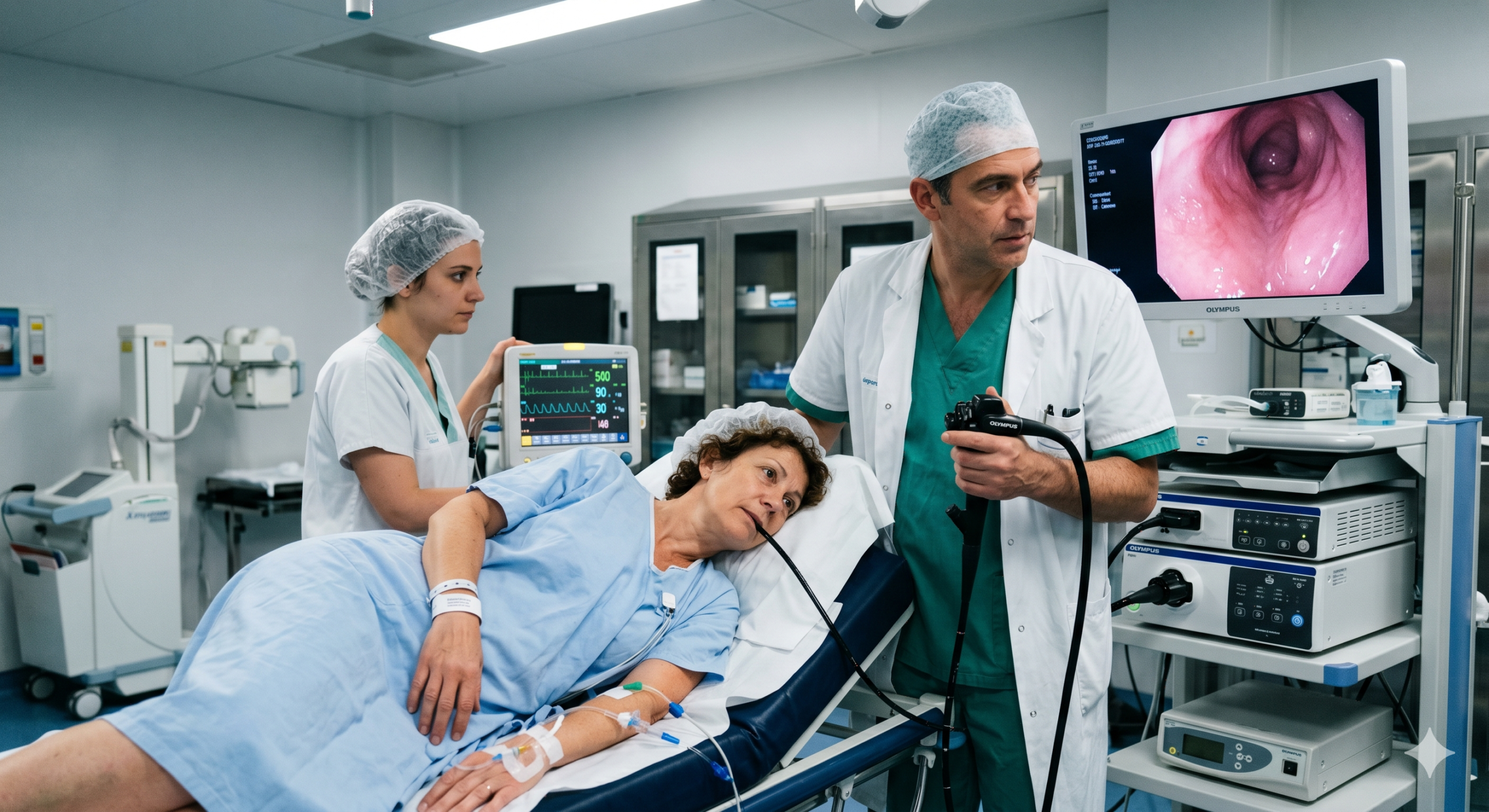
A thin, flexible tube with a high-definition camera and light at the tip is passed through the mouth, down the throat, and into these structures. The camera transmits a live video feed to a monitor, so your doctor sees the tissue lining in real time. The scope also has a working channel through which small instruments can be passed — allowing biopsies to be taken, bleeding to be treated, or certain therapeutic maneuvers to be performed during the same procedure.
"You're sedated throughout. The procedure typically takes 10 to 20 minutes. Most patients have no memory of it and feel comfortable from start to finish."
Why Houston Gastroenterologists Recommend Upper Endoscopy
EGD is one of the most commonly performed GI procedures because the upper GI tract is involved in a wide range of conditions — many of which can only be accurately diagnosed by looking directly at the tissue:
What Happens During the Procedure

You'll arrive at the Houston endoscopy center 30 to 45 minutes before your procedure. After check-in and a nursing assessment, an IV is placed and sedation is administered — most patients are drowsy within moments.
The gastroenterologist passes the scope gently through the mouth and pharynx; a bite block protects your teeth. Air is introduced gently to open the digestive structures for a clear view.
During withdrawal, the doctor examines the duodenum, stomach, and esophagus carefully. If a biopsy is warranted, tiny pinch forceps collect small tissue samples — you won't feel this.
The whole procedure typically takes 10 to 20 minutes for a diagnostic exam; therapeutic procedures take longer. You wake up in the recovery area without knowing the procedure is over, and most patients are ready to leave within an hour.
What Biopsies Involve and How Long Results Take

If biopsies are taken during your upper endoscopy, the tissue samples are sent to a pathology laboratory and results typically return within three to seven business days. Your GI team at Your GI Center in Houston will follow up with you directly to discuss the results and explain what they mean for your care plan — you won't receive a confusing report without context.
Preparation for Upper Endoscopy
Upper endoscopy requires an empty stomach for safety and a clear view. The preparation is straightforward — and unlike a colonoscopy, there's no bowel prep required:
- Stop eating solid food at least eight hours before — typically nothing after midnight for a morning procedure.
- Clear liquids are sometimes permitted until two to four hours before — your prep instructions will specify.
- No bowel prep is required — the single biggest difference from colonoscopy prep.
- Arrange for someone to drive you home, because of the sedation used.
Is Upper Endoscopy Safe?
Upper endoscopy is one of the safest procedures performed in gastroenterology, and serious complications are rare. The most common minor experience afterward is a mild sore throat or bloating from the air used during the procedure — both of which resolve quickly.
Uncommon complications include bleeding (most often when biopsies or therapeutic procedures are performed), perforation (extremely rare), and reactions to sedation. Your gastroenterologist will discuss your individual risk profile and answer any questions before the procedure.
What Happens After: Discussing Your Results
Before you leave the facility, your Houston gastroenterologist will speak with you about what was seen — the initial findings, whether anything was biopsied, what therapeutic steps were taken if any, and your next steps.
If you're still groggy from sedation, have a family member or friend present to hear this information — and don't hesitate to follow up by phone once you're fully alert. Have questions beforehand? Visit our FAQ page or read more on our blog.
Schedule Your Upper Endoscopy in Houston at Your GI Center
Your GI Center performs upper endoscopies at on-site endoscopy centers in South Houston, Lake Jackson, and Bay City. Our board-certified Houston gastroenterologists perform diagnostic and therapeutic EGDs for patients throughout South Houston, Pearland, Lake Jackson, Clute, Freeport, Angleton, and the surrounding Southeast Texas region.
"An upper endoscopy gives your gastroenterologist a direct look at what's happening in your upper GI tract — and that clarity is the starting point for the right treatment. If your doctor has recommended one, don't let it sit on your to-do list."
Schedule Your Upper Endoscopy in Houston at Your GI Center
Our board-certified Houston gastroenterologists, Dr. Nizam Meah and Dr. U. Siddiqui, perform upper endoscopy at on-site endoscopy centers across Houston and Southeast Texas. From your consultation through your follow-up conversation, it's the same team and the same facility. Appointment requests are typically returned within three hours during business hours.