
By the time most people reach their 60s, the pouches have probably already formed. They just don’t know it. Diverticulosis affects around half of adults by age 60 and the majority by age 80. For most people, it’s silent. The problem is that diverticulosis can become diverticulitis at any time, ranging from a painful but manageable episode to a serious complication requiring hospitalization or surgery.
How Diverticula Form
Diverticula develop at weak points in the colon wall where blood vessels penetrate the muscle layer. When pressure inside the colon is chronically elevated, these weak points are pushed outward. Low-fiber diets — common in Western countries and prevalent in Southeast Texas — are consistently associated with higher rates of diverticulosis.
The Role of Dietary Fiber
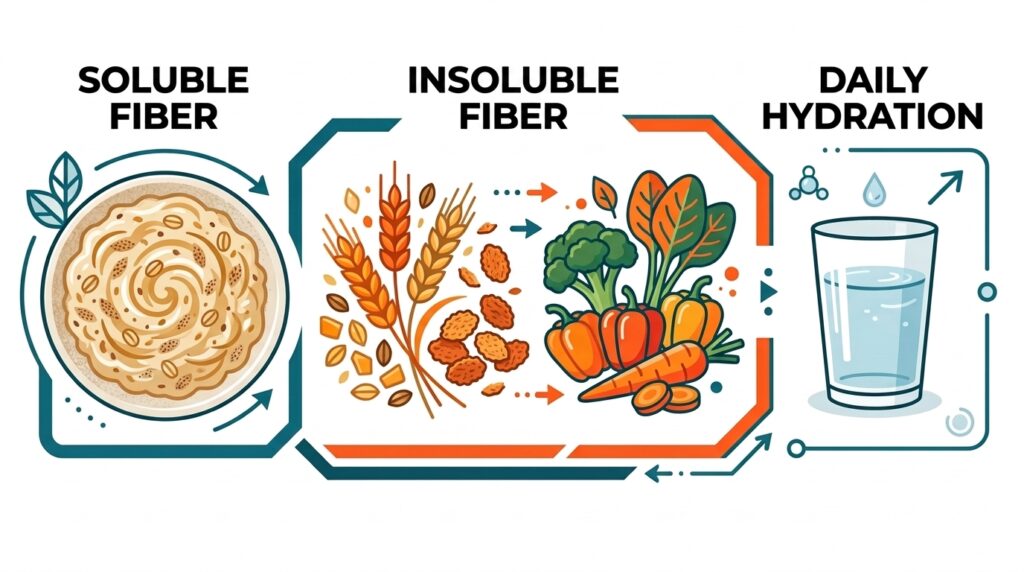
Dietary fiber is the most evidence-backed dietary intervention for reducing diverticulitis risk. Current recommendations are 25 grams per day for women and 38 grams per day for men — targets most Americans fall significantly short of, averaging around 15 grams daily.
Both soluble fiber (oats, psyllium husk, apples, beans, lentils) and insoluble fiber (whole grain breads, wheat bran, many vegetables) contribute to reducing colonic pressure. Increase fiber gradually — add five to ten grams per week — and drink at least six to eight glasses of water daily.
The Nuts and Seeds Question
For decades, gastroenterologists advised patients with diverticulosis to avoid nuts, seeds, and popcorn. Multiple large prospective studies have since found no association between nut, seed, or popcorn consumption and increased diverticulitis risk. In fact, nut consumption was associated with reduced risk in some analyses. The nut and seed restriction has largely been abandoned in current clinical guidelines.
Red Meat, Exercise, and Medications
Several large cohort studies have found an association between high red meat consumption and increased diverticulitis risk. Physical activity is independently associated with reduced diverticulitis risk — 30 minutes most days is meaningful.
NSAIDs (ibuprofen, naproxen) and corticosteroids increase diverticulitis risk. Acetaminophen (Tylenol) is generally the preferred over-the-counter pain reliever for patients with known diverticular disease.
Long-Term GI Management

For most patients with diverticulosis, long-term management is primarily dietary and lifestyle-focused, with periodic colonoscopic surveillance. For patients who’ve had diverticulitis: post-episode colonoscopy (four to six weeks after resolution), discussion of recurrence risk and possible elective surgery, and ongoing dietary counseling.
Call 1-888-292-0010 — South Houston | Lake Jackson | Bay City