
If you’ve been quietly buying hemorrhoid cream and hoping the problem goes away on its own, you’re in very good company. Hemorrhoids affect an estimated three out of four adults at some point in their lives, and the discomfort they cause is something most people prefer to manage privately rather than mention to a doctor. But there’s a better approach.
What Hemorrhoids Actually Are
Hemorrhoids are swollen veins in the rectum and anus — similar in nature to varicose veins. They’re caused by increased pressure in the lower rectum from straining, chronic constipation or diarrhea, prolonged sitting, pregnancy, or natural weakening of supportive tissue with age.
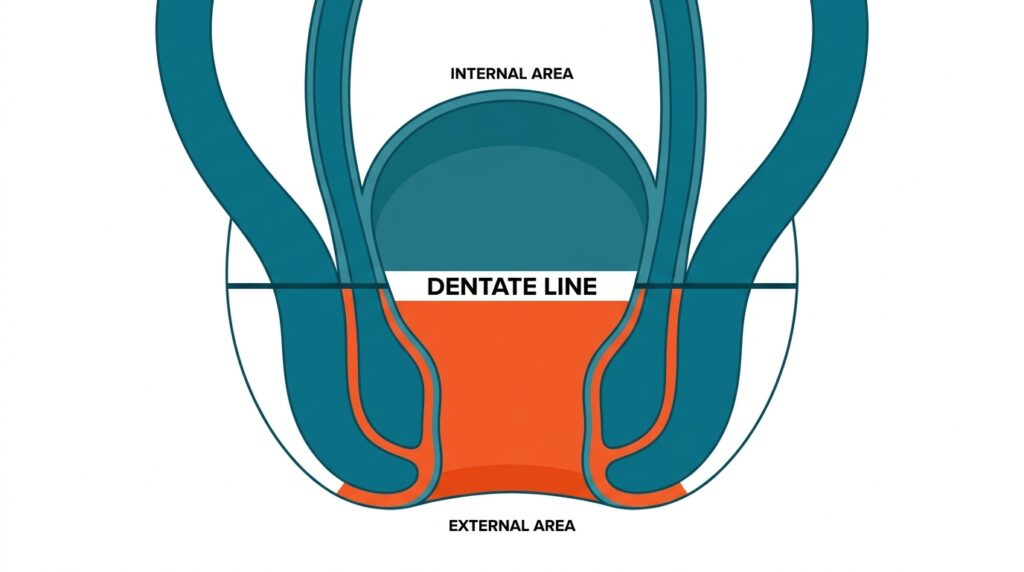
Internal hemorrhoids develop inside the rectum, above the dentate line. Because they’re above this pain-sensing boundary, internal hemorrhoids typically don’t cause pain unless they prolapse. They do commonly cause painless rectal bleeding — bright red blood in the toilet bowl, on toilet paper, or on the surface of stool.
External hemorrhoids develop at or below the dentate line. They can cause pain, itching, and discomfort — particularly when thrombosed, producing a hard, tender lump.
Why Rectal Bleeding Should Never Just Be Assumed to Be Hemorrhoids
Colorectal polyps, colorectal cancer, inflammatory bowel disease, and anal fissures also cause rectal bleeding. Assuming rectal bleeding is hemorrhoids without evaluation has contributed to delayed cancer diagnoses. This is especially true for adults over 45 — exactly the population where colorectal cancer screening becomes standard care.
If you’re experiencing rectal bleeding for the first time, or if it’s changed in character or is accompanied by other symptoms, see a gastroenterologist.
What Actually Helps at Home
For mild to moderate hemorrhoid symptoms: warm sitz baths (15 to 20 minutes several times daily), adequate dietary fiber (25 to 35 grams daily), staying hydrated, topical OTC treatments for temporary symptom relief, and avoiding prolonged sitting on the toilet or straining.
When Home Remedies Aren’t Enough
If symptoms have persisted beyond two to three weeks of consistent home management, recur frequently, involve significant bleeding, or significantly affect your quality of life — it’s time to see a gastroenterologist. The most common in-office treatment for internal hemorrhoids is rubber band ligation (hemorrhoid banding) — effective, doesn’t require sedation for most patients, and takes only a few minutes.
Grades of Internal Hemorrhoids
Grade I (no prolapse), Grade II (prolapse with straining but self-reducing), Grade III (prolapse requiring manual reduction), and Grade IV (irreducible prolapse). The majority of patients have Grade I, II, or III — all typically manageable without surgery.
What to Expect at Your GI Center
Evaluation involves a brief physical examination including visual inspection and anoscopy — no sedation or bowel prep required, done in the office. Typically takes less than 15 minutes.
Call 1-888-292-0010 — South Houston | Lake Jackson | Bay City