Most people who come in for hemorrhoid treatment at Your GI Center are surprised by how simple it turns out to be. The procedure that resolves their hemorrhoids doesn’t involve a hospital, general anesthesia, a recovery period, or weeks off work. It’s done in the office. It takes about five minutes.
Rubber band ligation, commonly called hemorrhoid banding, is the most widely used office-based treatment for internal hemorrhoids. It’s been performed for decades, has an excellent track record, and is the recommended first-line procedural treatment for Grade I, II, and most Grade III internal hemorrhoids.
How Rubber Band Ligation Works
A small rubber band is placed at the base of the hemorrhoid, just above the dentate line where pain-sensing nerve fibers begin. The band cuts off circulation to the hemorrhoid tissue. Over the next five to seven days, the banded tissue dies and sloughs off — typically unnoticed, during a bowel movement.
The key to why it’s not painful for most patients: the band is placed above the dentate line, in a region of the rectum that doesn’t have the same pain-sensing nerve supply as external skin. Most patients feel little to no pain — the most common sensation is mild pressure or fullness.
Who Is a Good Candidate?
Hemorrhoid banding is specifically for internal hemorrhoids — Grade I, II, and III. It’s not appropriate for external hemorrhoids. The best candidates have internal hemorrhoids causing rectal bleeding, prolapse, or symptoms not responding to dietary and lifestyle management.
The Procedure: Step by Step
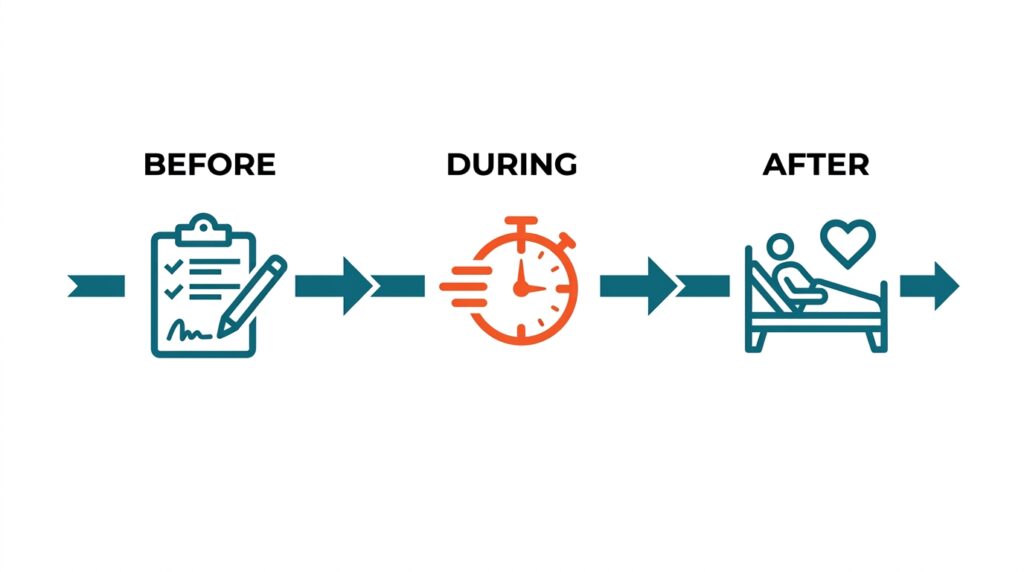
Before: No bowel prep required. No sedation used in most cases. No dietary changes needed. In-office during a regular appointment.
During: Positioned comfortably on your side. A small anoscope is inserted for visualization. A banding device is positioned at the base of the hemorrhoid and the band deployed. Most patients feel mild pressure. Five to ten minutes total. One to three hemorrhoids can be banded per session.
After: You return home immediately. No wound care requirements. Eat normally and resume most activities same day.
What to Expect Afterward
Mild fullness or pressure (resolving within 24 to 48 hours) and minor spotting when banded tissue detaches around day 5 to 7 are normal. Avoid aspirin, ibuprofen, and naproxen for several days after banding. Use acetaminophen if needed. Contact Your GI Center for significant pain, heavy bleeding, urinary retention, or fever.
Effectiveness and Comparison to Surgery
Rubber band ligation has success rates of 70 to 90 percent or higher for appropriately selected patients. For Grade I through Grade III internal hemorrhoids, banding achieves results comparable to surgery without the recovery burden (often two to three weeks of significant discomfort with surgical hemorrhoidectomy).
After Successful Banding: Colonoscopy
For patients overdue for colon cancer screening (adults 45 and older without a recent colonoscopy), scheduling a colonoscopy alongside or following hemorrhoid treatment is often recommended.
Call 1-888-292-0010 to schedule — South Houston | Lake Jackson | Bay City